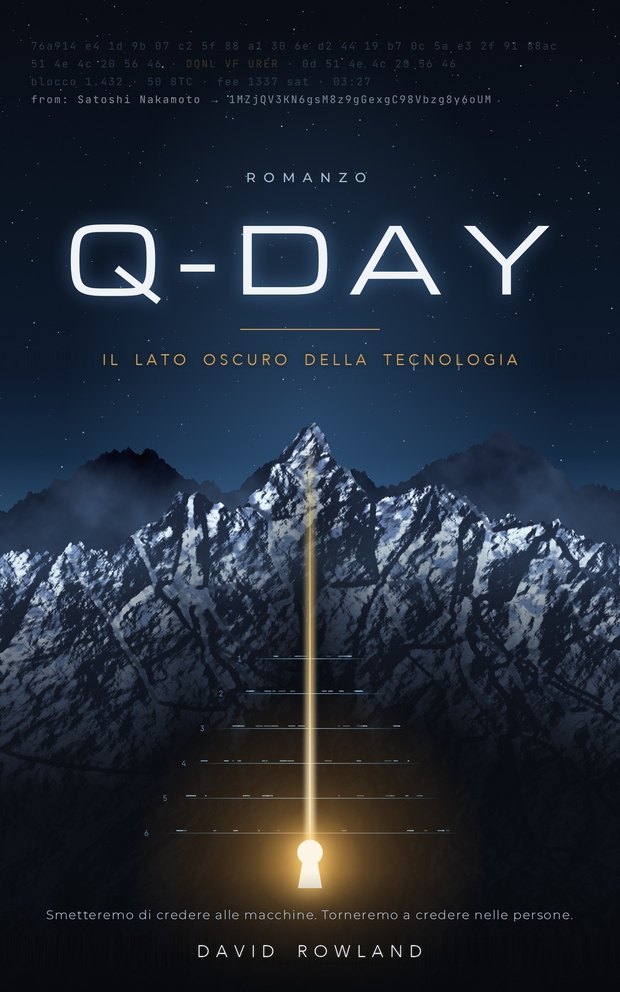
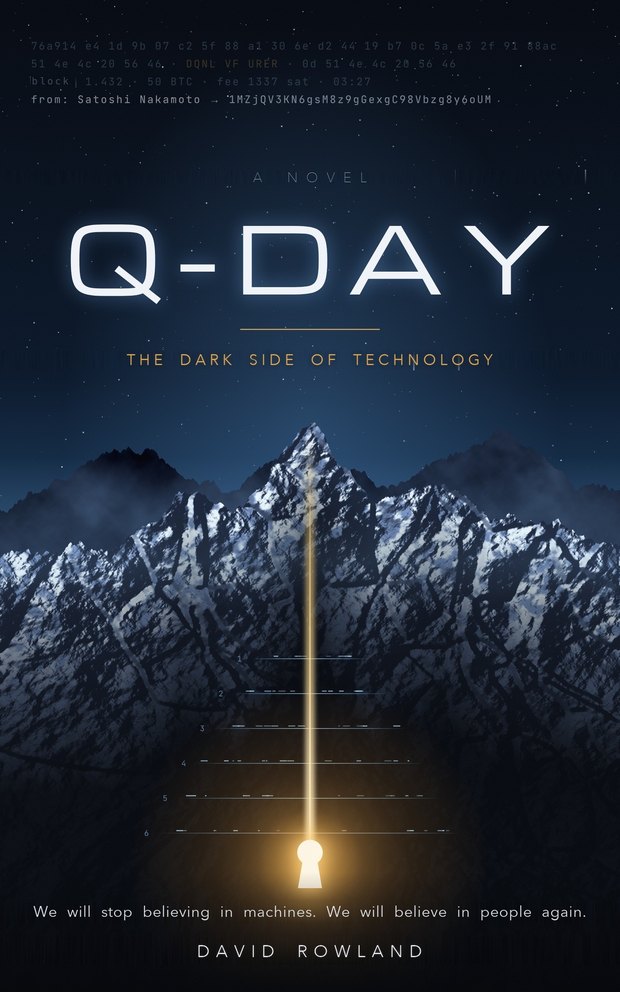
La storiaThe story
Per quindici anni i Bitcoin di Satoshi Nakamoto sono rimasti immobili: una fortuna che nessuno poteva toccare, protetta da una matematica che si credeva inviolabile. Poi, alle 3:29 di una notte di dicembre, cominciano a muoversi.
Giulia Ferri, analista blockchain a Zurigo, sa che quelle chiavi non si possono rubare. Sa anche che qualcuno l'ha appena fatto. Perché sotto trecento metri di roccia, in una montagna che non compare su nessuna mappa, una macchina ha imparato ad aprire ogni serratura digitale del pianeta: conti correnti, firme, segreti di Stato. Gli uomini che l'hanno costruita la chiamano un collaudo.
Uno di loro, però, ha deciso che il mondo deve sapere. E l'unico modo per lanciare l'allarme è cominciare a spendere il denaro dei morti. Mentre le monete si muovono, i mercati tremano e i governi si affannano, e una donna che compila liste diventa l'unica persona capace di leggere il messaggio nascosto nella catena.
For fifteen years, Satoshi Nakamoto's Bitcoin sat untouched: a fortune no one could move, guarded by mathematics everyone believed unbreakable. Then, at 3:29 on a December night, they begin to move.
Giulia Ferri, a blockchain analyst in Zurich, knows those keys can't be stolen. She also knows someone just did. Because under three hundred meters of rock, inside a mountain that appears on no map, a machine has learned to open every digital lock on the planet: bank accounts, signatures, state secrets. The men who built it call it a test.
One of them has decided the world must know. And the only way to sound the alarm is to start spending the money of the dead. As the coins move, markets convulse and governments scramble, and a quiet woman who keeps lists becomes the one person who can read the message hidden in the chain.
«Alle 3:29 di una notte di dicembre, la sveglia dei morti suona.»
"At 3:29 on a December night, the dead men's alarm goes off."
Il mondo di Q-DayThe world of Q-Day
«Q-Day» è il giorno che la crittografia ha sempre temuto: il momento in cui una macchina abbastanza potente rende inutile la matematica che protegge tutto ciò che diamo per scontato — i risparmi, i messaggi, l'identità, il confine tra ciò che è nostro e ciò che non lo è.
Non è fantascienza lontana: è il nostro mondo spostato di un soffio in avanti. Banche, Bitcoin, catene di blocchi, archivi segreti: tutto regge su serrature che nessuno ha mai davvero aperto. Q-Day immagina il giorno in cui qualcuno le apre tutte insieme, e cosa succede alle persone quando scoprono che le loro certezze erano soltanto un lucchetto ben riuscito.
Q-Day is the morning cryptography has always feared: the moment a machine grows powerful enough to make the mathematics that protects everything we take for granted — savings, messages, identity, the line between what's ours and what isn't — simply stop working.
It isn't distant science fiction. It's our own world nudged a breath forward. Banks, Bitcoin, blockchains, classified archives: all of it rests on locks no one has ever truly opened. Q-Day imagines the day someone opens them all at once, and what happens to people when they discover their certainties were only a very good lock.
Cosa resta quando le serrature si apronoWhat's left when the locks open
La vera minaccia, in Q-Day, non è la macchina. È quello che facciamo noi quando scopriamo che la matematica ha smesso di proteggerci. Un techno-thriller sulla fiducia — nel denaro, nelle macchine, l'uno nell'altro — e sul prezzo di custodire un segreto troppo grande.
The real danger in Q-Day is not the machine. It's what we do once we learn that mathematics has stopped protecting us. A techno-thriller about trust — in money, in machines, in each other — and the cost of guarding a secret too large to hold.